ARRL Audio News from this edition is available at http://www.arrl.org/arrlletter/audio/ for two weeks after publication.
Address Changes: Kathy Capodicasa, N1GZO, e-mail kcapodicasa@arrl.org.
Editorial: Rick Lindquist, N1RL, e-mail elindquist@arrl.org.
| IN THIS EDITION: |
- Tauzin says "We hear you"
- WRC-97 under way
- Last vanity gate to open December 2
- Mir okayed for school contacts
- ARRL debuts 160-meter DXing book
- ATVQ has new publisher
- Solar update
- Michael R. Vestal, W0YZS/XU6WV, SK
- Bruce O. Williams, WA6IVC, SK
- In Brief: This weekend on the radio; Sputnik model update; Vanity update; Ariane 502 launch a success; Orbital calendar to QRT; Youngest Extra revisited; Happy 100th birthday to W7HF! RF exposure panel; WSWSS Proceedings available; First China-North America EME QSO
| TAUZIN SAYS "WE HEAR YOU" TO AMATEURS, SCANNER FANS |
Hams, scanner enthusiasts and others are breathing a tentative sigh of relief this week. Their efforts apparently have paid off to convince House Telecommunications Subcommittee Chairman W. J. "Billy" Tauzin (R-La) that HR 2369, the Wireless Privacy Enhancement Act of 1997, was flawed legislation. Tauzin's so-called "scanner bill" has been rewritten to reflect the concerns of hams, volunteer firefighters, scanner enthusiasts and others.
Many meetings, phone calls and letters with Tauzin's staff followed the introduction of the original bill. At Tauzin's request, the League submitted recommendations to narrow its scope. From Washington, ARRL Legislative and Public Affairs Manager Steve Mansfield, N1MZA, reports that most of those recommendations found their way into a committee markup of the bill, released Wednesday, October 29. While the original version of HR 2369 covered the entire Commercial Mobile Radio Service (CMRS), the current version restricts its scope to just cellular telephone and the Personal Communications Service (PCS). Mansfield tempered his optimism with caution. "It is still too early to say whether the bill in its modified form, or in any other form, will ever become law," he said.
In introducing the substitute bill, Tauzin praised hams for their constructive cooperation. "The bill was never intended to prohibit the scanning of public safety frequencies or other noncommercial frequencies in which users have no expectation of privacy," he said. It was designed solely "to protect users of wireless services that pay for such services." Mansfield said the League worked with a coalition of other organizations to make sure members' voices were heard on The Hill. Changes also were recommended by scanner interests including Uniden and Tandy.
Unless Congress cuts corners, the bill still has a long way to go. It must be passed by the full Commerce Committee before it goes to the floor of the House. "The ARRL will continue to work with committee staff to fine tune one of the bill's provisions that could have unintended consequences with regard to unrelated modification of equipment," Mansfield said.
In its original form, the bill had generated a good deal of controversy that boiled over into emotional letters and e-mail messages to Members of Congress. Some critics interpreted the bill as outlawing equipment that receives law enforcement, fire, EMS and other nonbroadcast services, and felt it could even prohibit listening to these transmissions. The ARRL believed it could also impede the ability of manufacturers to include expanded VHF and UHF receiving capability, something most hand-held and mobile transceivers now offer.
While the League did not object to the original bill's efforts to curb cellular and PCS eavesdropping--something that's already illegal--its primary objection was that it could adversely affect the efforts of ham radio emergency volunteers, volunteer fire departments and other agencies that monitor public service frequencies using scanners. Among other things, the League pointed out to House members this month that the Electronic Communications Privacy Act (ECPA) of 1986, makes it illegal to intercept cellular, PCS, and other telephone-type communication.
One provision of the latest version calls on the FCC to consider defining the expression "capable of readily being altered" to require scanning receivers to be made in a way that effectively precludes alteration as necessary to prevent illegal use. Another calls on the FCC to consider requiring warning labels for scanning receivers that alert users to the prohibitions in federal law.
Mansfield praised Tauzin and his staff for paying attention to Amateur Radio concerns on the proposed legislation. "On the whole, it looks like Congress has listened," he said.
| WRC-97: ARTICLE S25 CONSIDERATION PROBABLY DEFERRED UNTIL 2001 |
Late word from the ITU's 1997 World Radiocommunication Conference in Geneva is that Article S25 of the international radio regulations might not end up on the agenda for the WRC-99 after all. Article S25 was placed on the tentative agenda for WRC-99 at WRC-95, two years ago. A working group of WRC-97 delegates compiling the agenda for WRC-99 decided on Friday, October 31, to recommend that the matter be held over until 2001 because of a long list of other items vying for inclusion on the WRC-99 agenda. The decisions as to what will and will not be included on the WRC-99 agenda will not be final until agreement is reached in the Plenary, much later on in the four-week conference. Article S25 contains the international radio regulations that are specific to the Amateur and Amateur-Satellite Services, including the Morse code requirement for operation below 30 MHz.
The possible realignment of the 40-meter allocation, to resolve the conflict between amateurs and broadcasters in part of the band, tentatively has a place on the WRC-99 agenda. This issue likely will be tied to the desire of HF broadcasting for more spectrum between 4 and 10 MHz. Both issues will be on the WRC-99 agenda unless more urgent items crowd them off before the close of WRC-97.
Ham radio is well represented at WRC-97, which began Monday, October 27. ARRL Technical Relations Manager Paul Rinaldo, W4RI, is a member of the US delegation. Jim Dean, VE3IQ, of the Radio Amateurs of Canada, David Wardlaw, VK3ADW, of the Wireless Institute of Australia, Keigo Komuro, JA1KAB, of the Japan Amateur Radio League, and Y. S. Park, HL1IFM, and J. G. Rhee, HL1AQQ, of the Korean Amateur Radio League, are on their nations' delegations. Each of these delegates has a strong IARU connection. IARU representatives include Larry Price, W4RA, Wojciech Nietyksza, SP5FM, and Michael Owen, VK3KI.
Among many other topics, the so-called "Little LEO" issue will come before the 1800 or so WRC-97 delegates. Current US proposals do not include any plans to share amateur frequencies, but this does not prevent other delegations from bringing up plans that might adversely affect ham radio allocations. That hasn't happened so far. In another action Friday, the working group that's considering Little LEO allocations agreed to a New Zealand proposal to designate 146 to 148 MHz as "no change," and Rinaldo is optimistic that designation will hold.
Little LEO advocates continue their attempts to justify additional allocations, but a recent FCC order to confirm an agreement to share existing Little LEO allocations warned the industry not to expect additional spectrum in the future. "We had significant difficulty obtaining spectrum for Little LEO service at WRC-95," the FCC said.
Rinaldo has been named chairman of a drafting group that's looking into the issue of wind profiler radars. These systems operate around 50, 449 and 1000 MHz and have some potential for interference to Amateur Radio. No surprise new bands for wind profilers were proposed at today's first meeting, and a European proposal for 420 to 435 and 438 to 440 MHz was taken off the table.
WRC-97 delegates also are being asked to consider adding the Earth Exploration Satellite service to the 430 to 440 MHz band and to upgrade the status of EES in the 1240 to 1300 MHz band.
World Radiocommunication Conferences are held every two years. WRC-97 is scheduled to wrap up on November 21
| FCC OPENS VANITY GATE 4! |
Christmas will arrive a bit early for General, Technician Plus, Technician and Novice Class hams. The FCC has announced that vanity call sign program Gate 4--the last vanity gate--will open December 2, 1997, for General, Tech Plus, Technician and Novice class hams to request a vanity call sign on or after that date. The potential number of applicants from these four licensee groups is huge--well over a half million hams!
Applicants may use either the electronic Forms 610V and 159 on the Web or hard-copy Form 610V and 159 -- but not both. Both versions -- plus fact sheets and answers to frequently asked questions -- are available at http://www.fcc.gov/wtb/amateur. The application fee is $50, payable by check (to "FCC"), bank draft, money order or credit card. Do not send cash. The FCC gives processing priority to electronically filed Forms 610V for which the filing fee and Form 159 have been received. The FCC now requires all vanity filers to include a Form 159, which must be mailed to the FCC with your fee.
It's up to applicants to make sure that their applications do not arrive before December 2, 1997. The FCC will return all applications that arrive early. All other vanity call sign gates will remain open, and Amateur Extra and Advanced class operators continue to be eligible to file for vanity call signs under those filing gates.
Any call sign requested must be appropriate for the class of license you hold. This means that Technician, Tech Plus, and General class licensees may ask for a Group C (13) or D (23) call sign. Novice class licensees may only request Group D call signs.
Electronic filers must mail the Form 159 Fee Remittance Advice to FCC, Amateur Vanity, PO Box 358994, Pittsburgh, PA 15251-5994. The Form 159 and the fee must be received within 10 days of electronically filing your Form 610V or your application will be dismissed.
Those filing on document Forms 610V and 159 must mail the application package containing a completed Form 610V with a copy of your license attached, Form 159 and the proper fee in a sealed envelope to FCC, Amateur Vanity, PO Box 358924, Pittsburgh, PA 15251-5924.
Application packages via courier or delivered by hand must be prepared in the same way, sealed in a second, outer envelope, and addressed to Federal Communications Commission, c/o Mellon Bank, 525 William Penn Way, 27th Floor, Room 153-2713, Pittsburgh, PA 15259, ATTN: Wholesale Lockbox Shift Supervisor. This address should only be used for applications delivered by hand or courier.
For general information, call the FCC's toll-free National Call Center, 888-225-5322 (CALLFCC).
| MIR HEALTHY ENOUGH FOR SCHOOL CONTACTS |
The ARRL Educational Activities Department has gotten the official okay from Johnson Space Center to start scheduling school QSOs with David Wolf, KC5VPF, aboard Mir. The spacecraft's health seems to be improved now that the new computer is installed. A series of problems with Mir, including several computer failures, had put the school contacts on a back burner for the past few months.
For more information on possible Mir school contacts, get in touch with Educational Activities Department, ARRL, 225 Main St, Newington, CT 06111; tel 860-594-0267; e-mail sarex@arrl.org.
Meanwhile, the current Mir crew of Wolf and Cosmonauts Anatoly Solovyev and Pavel Vinogradov remains very busy working and experimenting. Wolf reported recently that he's working up to 16 hours a day--a schedule that gives him little spare time for Amateur Radio. Wolf has been active infrequently on 145.985 MHz FM simplex, and the packet system also was active briefly. During a QSO with Wolf, Miles Mann, WF1F, asked him when he expected to be back on 2 meters. "David said he had six items on this top-priority list, and Amateur Radio was currently number 6," Mann said. The PMS 2-meter station had been turned off while the 13 KB mailbox was completely full.
Mann said the crew needs up to an hour a day to read, reply and delete the daily load of packet mail just to keep the mailbox open. "At the present time, the crew's workload is just too heavy to support this," he said.
The SAFEX II 70 cm repeater is still turned off. The crew is still trying to build up power reserves in the batteries of the space station. The space station is now getting power from all solar panels, except the one that was damaged by the Progress supply rocket collision in June. --SpaceNews via Miles Mann, WF1F
| ARRL DEBUTS 160-METER DXING BOOK |
The ARRL has introduced DXing on the Edge--the Thrill of 160 Meters, by Jeff Briggs, K1ZM. DXing on the Edge gives an insider's view at what it takes to make it on 160 meters. The book includes lots of interesting Topband history plus an audio CD of some exotic and exciting QSOs made from prominent DX stations. Much of 160 meter history revolves around the late Stew Perry, W1BB. His QSL card remains prize wallpaper for amateurs around the world.
Author Jeff Briggs, K1ZM, is a well-known DXer and contest operator. He has 270 countries confirmed on 160 meters, making him one of the leaders in the DX chase and an expert on this most challenging of amateur bands.
DXing on the Edge is $29.95 (plus shipping). Order Item No 6354. Call toll-free 888-277-5289 or see http://www.arrl.org/catalog/6354/.
| HARLAN TECHNOLOGIES IS NEW ATV QUARTERLY PUBLISHER |
Amateur Television Quarterly has a new publisher. Harlan Technologies took over the reins of the Amateur Radio niche publication on October 17, following the departure of former publisher Henry B. Ruh, KB9FO. "We have a little catch up to do," conceded Gene Harlan, WB9MMM. He said the Summer 97 issue will be out about November 1, followed by the Fall 97 issue around December 1. "After that we expect to be back on schedule, and it will be our goal to stay on schedule!"
Harlan Technologies had published CyberHam Magazine, which folded earlier this year. Its subscriber list and some departments have since been incorporated into SKIP magazine.
Harlan says ATVQ is always looking for new authors. "I have my own ideas as to what it will look like and the content that will be included," Harlan said. "I hope to keep that content on the video modes of ham radio, which means that I plan on including at least some on SSTV."
US subscription rates are $18 per year ($US20 in Canada and $US26 elsewhere). For more information, contact Amateur Television Quarterly, Harlan Technologies, 5931 Alma Dr, Rockford, IL 61108; tel 815-398-2683; fax 815-398-2688; orders 800-557-9469; e-mail atvq@aol.com; http://www.cris.com/~Gharlan.
| SOLAR UPDATE |
Solar sage Tad Cook, K7VVV, in Seattle, Washington, reports: The disturbed conditions forecast for last weekend hit quite hard. A coronal mass ejection a few days earlier caused the planetary A index to hit 25 last Friday, 19 on Saturday and 14 on Sunday. This caused HF havoc during the CQ Worldwide DX Contest.
Last week we saw the average solar flux drop a few points and the average sunspot number decline by 10. At the same time the average flux for the previous 90 days went up by one point from 86 to 87, and the solar flux was below this average for six out of the seven days.
This weekend is the ARRL CW Sweepstakes, and conditions for this domestic contest should be quite a bit better. Conditions are expected to be quiet to unsettled, with solar flux climbing from 90 to 95.
Northwest Research Associates has an interesting web site devoted to space weather, including charts of 10.7 cm solar flux, effective sunspot numbers and geomagnetic indices. Check it out at http://www.nwra.com/nwra/spawx/
Sunspot numbers for October 23 through 29 were 0, 11, 13, 14, 44, 50 and 41 with a mean of 24.7. The 10.7 cm flux was 79.7, 78.6, 81.4, 82, 84.4, 85.5 and 87.2, with a mean of 82.7, and estimated planetary A indices were 6, 25, 19, 14, 15, 13, and 10, with a mean of 14.6.
Here are some projections for domestic paths for this contest weekend:
From California to the Northeast: Check 80 meters 2330-1230 UTC, 40 meters 2130-0300 UTC and 0630-1500 UTC, 20 meters 1500-2200 UTC, and possibly 15 meters around 1800-1900 UTC.
From the Southeast to California: Check 80 meters 0000-1300 UTC, 40 meters around the clock, with the strongest signals from 0130-0300 UTC and 0630-1130 UTC, and 20 meters 1530-2200 UTC.
From Ohio to Texas: Check 80 meters 2130-1400 UTC, 40 meters around the clock with the least stable conditions around 0500-0600 UTC and the strongest signals from 0000-0200 UTC and 0700-1130 UTC. Check 20 meters 1500-2130 UTC.
From Seattle to the Midwest: Check 80 meters 2300-1500 UTC, 40 meters around the clock, with strongest signals 0100-0500 UTC and 0800- 1300 UTC, and 20 meters 1530-2330 UTC. 15 meters may open 1800-2130 UTC, and 10 meters might open 1900-2030 UTC.
From the Midwest to Hawaii: Check 80 meters 0330-1400 UTC, 40 meters 0200-1500 UTC, 20 meters around 1600 UTC and 1700-0000 UTC and 0130-0230 UTC, and 15 meters looks very good 1730-2330 UTC.
| MICHAEL R. VESTAL, W0YZS/XU6WV, SK |
Noted VHFer and contester Mike Vestal, W0YZS/XU6WV, of Cambodia, died October 27 in Cambodia. He was 54. Vestal also had held the call signs VR2WV and SV0FE. His friend, Brett Graham, VR2BG, called Vestal "the personification of a 'real' ham." As W0YZS, Vestal earned the first WAS on 432 MHz. He also was serious about DXing, contesting and developing 160-meter antennas, Graham said.
"His professional life was equally multifaceted, and his technical knowledge was not only extensive, but based on the hands-on, soldering-iron-in-one-hand and 'scope probe-in-the-other approach," he added.
Graham said he would be happy to relay condolence messages to Vestal's wife. Contact Brett Graham at vr2bg@harts.org.hk.
| BRUCE O. WILLIAMS SR, WA6IVC, SK |
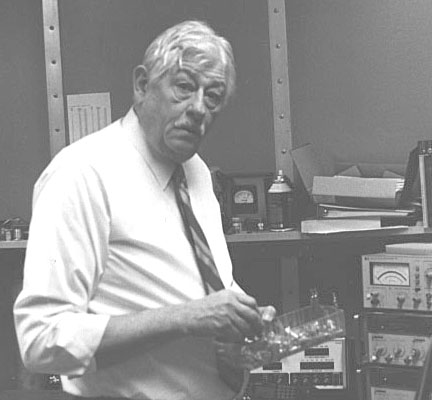 Former ARRL Headquarters staff member Bruce Williams, WA6IVC, of Smithville, Texas, died October 26. He was 71. Williams had been battling lung cancer and reportedly died of a blood clot.
Williams began his League career in April 1985 when he joined the Technical Department and served as the Product Review editor. In August 1987 he became the ARRL Advertising Manager. He loved to construct projects and may be best known for his article "The SIMPLEceiver" that appeared in September 1986 QST. He retired from the League in July 1989 and moved to Texas.
A technical writer and editor from the late 1950s until the early 1970s, Williams also served for about a year in the mid-1960s as vice president and general manager of Swan Electronics Corporation, a former ham radio manufacturer. He also had experience in the aircraft industry.
ARRL Membership Services Manager Chuck Hutchinson, K8CH, used the words "witty, charming and clever" to describe Williams. "We always operated Field Day together," Hutchinson recalled. "Each year we'd try something new--be it a home-made radio, a new antenna, or a solar battery charger. Those were fun times, and Field Day has never been the same for me since Bruce moved away."
Williams' wife, Charleen, survives. --Thanks to Bruce Muscolino, W6TOY, Chuck Hutchinson, K8CH, and Paul Pagel, N1FB
| In Brief: |
- This weekend on the radio: It's time for the ARRL November Sweepstakes CW contest! Also on tap: the North American Collegiate ARC Championship, CW, which runs concurrently with the ARRL SS and uses Sweepstakes rules.
- Sputnik model update: The hand launching of that Sputnik 1 (PS2) model from the Russian Mir space station now is set for November 3 at 0200 UTC. A working one-third scale model of Sputnik 1 will be tossed out during a space walk by Cosmonaut Anatoly Solovyev. Cosmonaut Pavel Vinogradov will take pictures from outside the spacecraft. The Sputnik model is nearly eight inches in diameter and weighs just over six pounds. It will transmit a "beep-beep" beacon signal, and the tone will vary with the temperature inside the spacecraft (from 372 Hz at -50 C to 1213 Hz at +50 C). US Astronaut David Wolf, KC5VPF, will remain inside Mir during the space walk. According to Guy Pignolet, secretary of the Aero-Club de France, power is provided by three packs of four lithium batteries at 3.5V each. The transmission frequency will likely be 145.820 MHz, and it will be also possible to listen to 145.841 MHz. The 500 mm antennas are circularly polarized, and it will be possible to listen to PS2 in SSB or FM. "The sound will be nicer with SSB, but the Doppler may make the shift appear more complex at the beginning and at the end of the satellite's visibility," Pignolet said. Reception reports go to FR5KJ, the club station at College Reydellet. Include an SASE and two IRCs for a certificate. For more information, see http://www.oceanes.fr/~fr5fc/spoutnik.html. --thanks to Miles Mann, WF1F, and Guy Pignolet
- Vanity update: The FCC in Gettysburg reports it has run vanity call sign applications through October 10. The FCC granted 92 new call signs. Another 89 applications landed in the WIPS stack and have already been dealt with.
- Ariane 502 launch a success: The Ariane 502 launch that was to have carried the Amateur Radio Phase 3D satellite into orbit is being declared a success. The Ariane 502 flight took off from the European Space Agency's facility in Korou, French Guiana, South America, October 30, and the upper stage payloads separated and deployed into a geostationary transfer orbit as planned. In August, ESA dropped Phase 3D from the Ariane 502 manifest when it became clear that AMSAT would not be able to make necessary modifications to the P3D spaceframe to handle additional stress and vibration in time to meet the launch schedule. AMSAT is hoping to fly Phase 3D aboard a future Ariane 5 launch and was anxiously awaiting the outcome of the Ariane 502 launch. The first Ariane 5 flight failed, and the launch vehicle had to be destroyed shortly after launch. --AMSAT
- Orbital calendar to QRT: For some years now, the League has offered a monthly orbit calendar for use with the OSCARLocator. Since requests for this monthly listing have dwindled to less than a half dozen, the League plans to end this service at year's end. --Jon Bloom, KE3Z
- Youngest Extra revisited: We've published reports of boys and girls of 10 and 11 years old earning their Extra class tickets. But Rebecca Rich, KB0VVT, of Raytown, Missouri, could have them all beat. According to her mom, Barbara Rich, KG0UT, Rebecca earned her Extra ticket in March 22, 1997, just a few months before her ninth birthday. In fact, the whole Rich family studied for and passed their Extra tests together, and all of their licenses were issued on the same day. Rebecca's dad is David Rich, KG0US. Rebecca has been a ham since March 1996, when she qualified for her Technician license (see QST, October 1996, p 19). Recently, Rebecca spent several hours operating in the CQ WW SSB contest at the home of Jerry Fisher, NX0I. Says her mom: "I believe that women and youth add a dimension to Amateur Radio that is needed." (Any other challengers for the title of Youngest Extra? --Ed)
- Happy 100th birthday to W7HF! George Wilson, W7HF, of Aberdeen, Washington, celebrates his 100th birthday November 1, 1997. The Grays Harbor Amateur Radio Club plans to honor Wilson at its November 6 meeting. Club member Frank Volz, KA7DNK, reports that Wilson is still active on the HF bands. Wilson has been an ARRL member since 1934. --Frank Volz, KA7DNK
- RF exposure panel: ARRL Lab Supervisor Ed Hare, W1RFI, will join Bob Cleveland of the FCC's Office of Engineering and Technology, and Greg Lapin, N9GL, an RF bioeffects researcher, for a panel discussion and slide presentation, "Keeping your Station Safe and Legal," Sunday, November 2, 2 PM CST, at Karger Recreation Center, 1850 Green Bay Rd, Highland Park, Illinois. The panel is free and open to all. The North Shore Radio Club is sponsoring this event. For more information, call 847-272-8347.
- WSWSS Proceedings available: The Proceedings of the Western States Weak Signal Society's 1997 Technical Conference are available directly from the WSWSS for a limited time only at $15 each postpaid (US only) from Bob Earl, KD6UIH, PO Box 332, Midway City, CA 92655-0332. Make checks payable to the Western States Weak Signal Society. Proceedings also are available from the ARRL for $15 (plus shipping) as Item Number 6346 at http://www.arrl.org/catalog. Topics include: "Single Board Transverter for 5760 MHz and Phase 3D" and "Rewinding Coax Relays for 12 VDC Operation," both by Paul Wade, N1BWT. For information on mailing rates outside the US, e-mail kd6uih@juno.com.
- First China-North America EME QSO: BY1QH again was active on 144 MHz EME on October 25 and worked KB8RQ for the first-ever China to North America EME contact. BY1QH also worked W5UN. The station operator was David, BZ1BM, who had help from Lasse, SM0KAK. --thanks to SM0KAK
| The ARRL Letter |
The ARRL Letter is published by the American Radio Relay League, 225 Main St, Newington, CT 06111; tel 860-594-0200; fax 860-594-0259. Rodney J. Stafford, KB6ZV, President; David Sumner, K1ZZ, Executive Vice President.
Circulation, Kathy Capodicasa, N1GZO, e-mail kcapodicasa@arrl.org.
Editorial, Rick Lindquist, N1RL, e-mail elindquist@arrl.org.
Visit the ARRLWeb page at http://www.arrl.org.
The purpose of The ARRL Letter is to provide the essential news of interest to active, organizationally minded radio amateurs faster than it can be disseminated by our official journal, QST. We strive to be fast, accurate and readable in our reporting.
Material from The ARRL Letter may be reproduced in whole or in part, in any form, including photoreproduction and electronic databanks, provided that credit is given to The ARRL Letter and The American Radio Relay League.
| How to Get The ARRL Letter: |
The ARRL Letter is distributed directly from ARRL HQ only to elected League officials and certain ARRL appointees and to paid subscribers of the now-defunct hard-copy edition of The ARRL Letter . For members and nonmembers alike, The ARRL Letter is available free of charge from these sources:
- The ARRLWeb page (http://www.arrl.org/arrlletter/). This version of The ARRL Letter includes any photographs.
- The HIRAM BBS: 860-594-0306.
- The ARRL Technical Information Server (Info Server): Send an e-mail message to info@arrl.org. The subject line should be blank. In the message body, type send ltrmmdd.txt, where mm represents two digits for the month and dd represents two digits for the day (The ARRL Letter is published every Friday). For example, to request The ARRL Letter file for Friday, January 3, 1997, you'd type send ltr0103.txt. Then, on a separate line, type quit.
- CompuServe and America Online subscribers, as a downloadable text file in the services' ham radio libraries
- The Netcom server, run by the Boston Amateur Radio Club and Mike Ardai, N1IST: Send e-mail to listserv@netcom.com (no subject needed). The body of the message should say subscribe letter-list.