Address Changes: Kathy Capodicasa, N1GZO, e-mail kcapodicasa@arrl.org.
Editorial: Rick Lindquist, N1RL, e-mail elindquist@arrl.org.
| IN THIS EDITION: |
- New FCC rules changes!
- FCC proposes vanity fee increase
- SAREX mission launches late
- FCC does another vanity run
- Dayton Hamvention award winners
- Gilfer Shortwave out of business
- ARRL/TAPR conference set
- FCC sequential call signs
- Solar Update
- Alfred T. "Ted" Goble, K2HNW, SK
- In Brief: This weekend on the radio; SAREX at NSTA confab; Cronkite has surgery; Boys & Girls Clubs on the air; Listen up for RFI; New DX bulletin; Heard op gets good ink; Radio museum on line
| FCC ISSUES CHANGES IN AMATEUR RADIO RULES |
In response to three petitions for rulemaking, the FCC has adopted changes to the Amateur Service rules that--among other changes--will make it easier to obtain 1×1 call signs for special event stations and harder to get a club station license. Other amendments to the rules included in a Report and Order released April 1, 1997, will allow hams to append special designators either before or after their call signs--or both, and will recognize, but not require, the use of a session manager at volunteer examiner testing sessions.
The FCC declined to give examination credit for formerly held licenses, and turned down an ARRL request for a lifetime operator's license.
Under the new amendments, the FCC will allow a licensee to substitute a self-selected call sign from the block of 1×1 call signs for temporary use during a special event operation. The station must announce its regularly assigned call sign at least once an hour. The special event call signs will be coordinated and issued by outside volunteer entities, not by the FCC. The Commission will announce later when and how volunteer entities may volunteer their services. The chief of the Wireless Telecommunications Bureau then would certify volunteer entities to serve as amateur station special event call sign coordinators, who would issue 1×1 calls from a common, online special event call sign database. By definition, a 1×1 call sign consists of a single prefix letter, K, N or W; the region number, 0 to 9; and a single suffix letter, A to W, Y and Z--750 call signs in all. The FCC turned down a suggestion that would have limited special event call signs to stations licensed to Amateur Extra class operators.
In proposing to increase the eligibility requirements for a club station license, the FCC said it was "important to determine that the applicant for a club station license is a legitimate radio club and not just a person seeking to acquire additional call signs." Under the rules changes, the FCC has raised the eligibility requirement from at least two members to a minimum of four. Applicants for a club station license must have a club name, a document of organization, management, and a primary ham radio purpose that's consistent with FCC rules.
Responding to a petition by the National Conference of Volunteer-Examiner Coordinators (NCVEC), the FCC said VECs could elect to designate a session manager if they wanted to, but they would not be required to do so. The Commission's new rules recognize the VE session manager function but emphasize that the three volunteer examiners at a test session would still be held "jointly and severally responsible for the proper conduct of each examination administered."
Another change will allow hams to include a self-assigned indicator before, after or both before and after the assigned call sign when identifying. Current rules only permit using such indicators after the station's regular call sign. Self-assigned indicators include those used to indicate location or type of operation, such as /KP2 when operating in the US Virgin Islands or /m when operating in a vehicle. They also can denote participation in an unusual event or other atypical station operation, according to the FCC.
Citing mostly negative comments, the FCC decided against allowing exam credit for formerly held amateur operator licenses. The Commission also said "no" to the ARRL's suggestion that the operator license be valid for the lifetime of the holder. The FCC said operators would still have to renew their station licenses every 10 years and that it did not want to maintain a separate database to keep track of station license expirations.
The FCC announced all of the rules changes in a Report and Order, FCC 97-99, adopted March 20 and issued April 1. The amendments become effective 30 days after the Report and Order is published in The Federal Register.
| FCC PROPOSES VANITY LICENSE FEE HIKE |
The FCC has proposed raising the fee for a vanity call sign from $30 to $50 for the 10-year license term. The fee increase was among those included for all FCC-regulated services--including broadcasters and commercial satellite services--in Notice of Proposed Rulemaking 97-49. Fee adjustments are an annual exercise for the FCC, which says it must calculate its fees to "recover the amount of regulatory fees that Congress has required it to collect in FY 1997." The FCC said the regulatory fees will recover the costs of enforcement, policy and rulemaking, international and user information activities for FY 1997, which began last October 1.
"We are proposing that applicants for amateur vanity call signs will pay a $5 annual fee per call sign, payable for an entire 10-year license term at the time of application," the NPRM states. Under the proposal, all FCC-imposed $3 annual fees will increase to $5 per year, which is the lowest fee in the new schedule. The FCC said it anticipated 10,000 applications for vanity call signs in FY 1997.
In the NPRM, the Commission said the fee revisions would create a system that relies on cost-based fees for services. The Commission's proposed schedule would reduce fees for services whose regulatory costs have declined and adjust fees upward for services that have higher regulatory costs. --FCC
| SAREX-CARRYING SHUTTLE LAUNCH DELAYED |
The space shuttle Columbia took off around 1920 UTC today (April 4) a little more than 24 hours behind its original schedule. Mission STS-83 is carrying the Shuttle Amateur Radio EXperiment--SAREX. Columbia originally was scheduled to be launched Thursday, April 3, but NASA postponed the launch for 24 hours after NASA managers determined that a water coolant line in the orbiter's payload bay required additional insulation to prevent it from freezing during the orbiter's 16 days in space.
Three hams are aboard the shuttle Columbia. They are James D. Halsell, KC5RNI, mission commander; Janice E. Voss, KC5BTK, payload commander; and Donald A. Thomas, KC5FVF, mission specialist. STS-83 is scheduled to last 16 days. The mission carries SAREX configuration C: voice and packet. The mission's primary payload is the microgravity science laboratory.
Eighteen schools, including institutions in the People's Republic of China and on Okinawa, have been scheduled for SAREX contacts during the mission. Because of the delayed launch, SAREX schedules also are likely to be postponed by at least 24 hours and could be disrupted.
The SAREX Working Group has designated the following frequencies during the STS-83 mission:
- FM voice downlink (worldwide): 145.55 MHz
- FM voice uplink: 144.91, 144.93, 144.95, 144.97, and 144.99 MHz
- FM voice uplink (Europe only): 144.70, 144.75, and 144.80 MHz
If packet is available, the FM packet downlink will be 145.55 MHz; the uplink will be 144.49 MHz. The FM packet call sign will be W5RRR-1.
Reports and QSLs go to ARRL-EAD, STS-83 QSL, 225 Main St, Newington, CT 06111-1494. Include the following information: STS-83, date, time in UTC, frequency and mode (FM, voice or packet). You must also include an sase using a large, business-size envelope if you wish to receive a card.
| FCC DOES ANOTHER VANITY RUN |
The FCC has granted another 420 or so vanity call signs, representing vanity applications received between February 6 and March 4. Some 330 of the applications ended up in the work in process or WIPS stack, many because the FCC was unable to issue any of the applicant's call sign choices. The vanity call sign program remains popular: During February and March, the FCC received 1768 vanity call sign applications, the majority of them filed electronically.
A reminder: Vanity applicants who did not get one of their call sign choices will have to apply in writing for a refund of the $30 filing fee. The FCC will mail to all unsuccessful applicants a copy of the application (including FCC processing numbers) and a copy of their check. To request a refund, applicants then must send a letter to the FCC, 1270 Fairfield Rd, Gettysburg PA 17325-7245, along with their taxpayer ID number (Social Security number).
The FCC still has not said when it plans to open Gate 3 for Advanced class vanity applicants.
| DAYTON AWARD WINNERS ANNOUNCED |
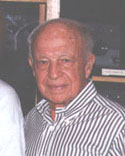 Leo Meyerson, W0GFQ |
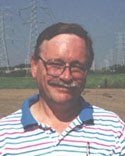 Al Ward, WB5LUA |
This year's Dayton Hamvention Amateur of the Year is Leo I. Meyerson, W0GFQ, the founder of World Radio Laboratories (WRL). The Technical Excellence Award will go to Al Ward, WB5LUA, an accomplished VHF, UHF and microwave specialist. The special achievement award will be presented to Joseph J. Fairclough, WB2JKJ, a pioneer in using Amateur Radio in the classroom.
Leo Meyerson, 86, is still an active ham (69 years) and still lives in Omaha, Nebraska, where he founded WRL in the mid-1930s. Among other ham radio gear, WRL turned out the well-known Globe series of transmitters (Globe Scout, Globe Chief, Globe King), many of which exist today as collector's items. WRL also was a major ham radio retailer, and many Novices of the day exchanged QSL cards printed by WRL. More recently, Meyerson was the driving force behind the current collection of ham radio and electronic equipment on display at the Western Heritage Museum in Omaha, which includes a WRL exhibit.
Meyerson is active in the Quarter Century Wireless Association (QCWA), which presented him with its Hall of Fame Award in 1994. He plans to be in Dayton to accept his award as Amateur of the Year.
Al Ward, of Allen, Texas, earned his award for his accomplishments in VHF, UHF and microwave technology. A ham since 1965, he holds WAS on 50, 144, 220 and 440 MHz, is working on WAS on 1296, and holds North American distance records on several VHF/UHF bands and modes as well as world EME DX records on 3456 and 5760 MHz. Ward has designed numerous circuits for VHF, UHF and microwave use, has written numerous articles and has organized and contributed to conferences for VHF-UHF enthusiasts. Professionally, Ward is an electrical engineer and works for Hewlett-Packard.
Joe Fairclough, of Sea Cliff, New York, is being honored his for years of using Amateur Radio in the classroom as a motivator for his students. Starting out with 30 students at Junior High School 22 on Manhattan's lower East Side, Fairclough eventually expanded and formalized his integration of ham radio into the classroom into a program he calls Educomm--education through communication. Today, he has more than 500 students enrolled in Educomm, plus students in other systems around the US using the Educomm Amateur Radio System.
The three awards will be presented at the Dayton Hamvention Banquet, Saturday, May 17, at the Convention Center. Ham-Astronaut Ron Parise, WA4SIR, is the banquet speaker. --Newsline/DARA/QST
| GILFER SHORTWAVE OUT OF BUSINESS |
Gilfer Shortwave of Park Ridge, New Jersey, is the latest casualty in the sagging radio hobby market, according to a reliable industry source. The company, which had been in business for more than four decades, had billed itself as "America's Premier SWL Center." Although primarily a retailer for the SWL and BCL, Gilfer also sold some Amateur Radio equipment, accessories and books.
Paul Lannuier, N2HIE, took over Gilfer a few years ago and served as Gilfer's president and technical director. He formerly worked for Japan Radio Corp, and Gilfer carried much of the JRC line. Lannuier has not been available for comment. Calls to Gilfer's telephones go unanswered, and the company's Web site is now dark.
| 1997 ARRL/TAPR CONFAB SET |
Mark your calendar and plan to attend the year's premier event in Amateur Radio digital communication, the 1997 ARRL and TAPR Digital Communications Conference. This year's conference will be held October 10-12, 1997, in Baltimore, Maryland--minutes away from Baltimore-Washington International Airport (BWI). 1997 marks the second year in which the ARRL Digital Communications Conference and TAPR Annual General Meeting have joined into one conference! The 1997 DCC will be co-hosted by AMRAD (Amateur Radio Research and Development Corporation).
The ARRL and TAPR Digital Communications Conference is an international forum for radio amateurs and experts in digital communications, networking, and related technologies to meet, publish their work, and present new ideas and techniques for discussion. Presenters and attendees will have the opportunity to exchange ideas and learn about recent hardware and software advances, theories, experimental results, and practical applications.
Anyone interested in digital communications is invited to submit a paper for publication in the Conference Proceedings. Presentation at the Conference is not required for publication. Papers are due by August 20, 1997. Submit papers to Maty Weinberg, ARRL, 225 Main St, Newington, CT 06111; lweinberg@arrl.org. Paper submission guidelines are available on-line at http://www.tapr.org/dcc. ARRL and TAPR especially welcome papers from full-time students to compete for the second annual student papers award. Two $500 travel awards may be given, one for the best technical/theory-oriented paper by a student, and one for the best educational or community-oriented application paper by a student. The paper should relate directly to a wireless digital communication topic (see guidelines for more information). Papers co-authored by educators or telecommunications professionals also are eligible for this award, as long as a student is the first author. Deadline for receipt of finished student paper manuscript is June 20, 1997. Please note: This deadline is different than the general conference submission date.
The conference has scheduled seminars and symposiums on Friday afternoon and Sunday. Conference papers, selected topics thread, lunch, and dinner are on Saturday. Symposiums held at this year's DCC will include a full-day symposium on APRS packet-location software, a half-day symposium on spread spectrum system design and theory, and a half-day seminar on Friday entitled "RF Basics for Computer Weenies: Helping the RF-Challenged Get the Most Out of the New High-Speed Wireless Toys."
For more information, contact TAPR, 8987-309 E Tanque Verde Rd, No. 337, Tucson, AZ 85749-9399; tel 817-383-0000; fax 817-566-2544; e-mail, tapr@tapr.org; Web http://www.tapr.org.
| FCC SEQUENTIAL CALL SIGN UPDATE |
The following is a list of FCC sequentially assigned call signs issued as of April 1, 1997.
| District | Group A--Extra | Group B--Advanced | Group C--Tech/Gen | Group D--Novice |
|---|---|---|---|---|
| 0 | AB0EW | KI0HM | ++ | KC0AIR |
| 1 | AA1RX | KE1HL | N1YWB | KB1CDF |
| 2 | AB2DK | KG2KS | ++ | KC2BGQ |
| 3 | AA3PO | KE3ZI | N3YZS | KB3BST |
| 4 | AF4BV | KU4EV | ++ | KF4QIR |
| 5 | AC5LX | KM5IC | ++ | KC5ZSK |
| 6 | AD6AV | KQ6NW | ++ | KF6JXT |
| 7 | AB7UQ | KK7GL | ++ | KC7VMM |
| 8 | AA8ZU | KI8BQ | ++ | KC8GTE |
| 9 | AA9UG | KG9JZ | ++ | KB9PZR |
| N Mariana Is | NH0A | AH0AX | KH0GS | WH0ABG |
| Guam | # | AH2DC | KH2RM | WH2ANT |
| Hawaii | AH7S | AH6PA | KH7DJ | WH6DDT |
| Amer Samoa | AH8O | AH8AH | KH8DH | WH8ABF |
| Alaska | AL0D | AL7QT | KL0FM | WL7CUE |
| Virgin Islands | ++ | KP2CJ | NP2JQ | WP2AIH |
| Puerto Rico | NP3C | KP3AR | NP3MI | WP4NMZ |
# New prefixes are available for this block, but none have been issued.
++All call signs in this group have been issued in this area.
| SOLAR ACTIVITY UP A "TAD" |
Sun watcher Tad Cook, KT7H, in Seattle, Washington, reports: Solar activity was up a little this week. This was unexpected, as it wasn't present in the previous solar rotation, although an upturn is expected in connection with the next solar cycle. The average sunspot number was up almost 23 points compared to the previous week, and the solar flux went from the low 70s to 80. No word yet on whether this little blip in activity is from the last cycle or the next one. Unless more activity appears, expect the solar flux to drop down to the mid or low 70s again, then rise to the high 70s in a few weeks. April 22 through 25 may see some increased geomagnetic disturbances. Expect 20 meters to still be the best band for worldwide DX, with propagation extending into the evening as the days get longer.
Sunspot numbers for March 20 through 26 were 23, 0, 0, 0, 0, 0 and 0, respectively, with a mean of 3.3. The 10.7-cm flux was 71.5, 70.5, 70.6, 70.7, 71, 70.6 and 69.8, respectively, with a mean of 70.7, and estimated planetary A indices for the same period were 3, 5, 9, 4, 6, 12, and 14, respectively, with a mean of 7.6.
Sunspot numbers for March 27 through April 2 were 13, 18, 26, 29, 22, 23 and 52, respectively, with a mean of 26.1. The 10.7-cm flux was 72.2, 73.2, 75.3, 74, 74.7, 76.3 and 80.5, respectively, with a mean of 75.2, and estimated planetary A indices were 6, 13, 15, 10, 5, 8, and 7, respectively, with a mean of 9.1.
| ALFRED T. "TED" GOBLE, K2HNW, SK |
Physicist, professor and author Ted Goble, K2HNW, of Schenectady, New York, died March 12, 1997. He was 88. During World War II, Goble was involved in radar countermeasures research at Harvard University and in England, and later served as a military consultant on missile and satellite programs. He retired as a professor of physics at Union College in 1974. He co-authored the undergraduate textbook, Elements of Modern Physics. Goble had been a ham since 1924 and was a member of the Schenectady Amateur Radio Association. He was faculty advisor for the Union College Amateur Radio club station, W2UC. His wife and three sons survive.
| In Brief: |
- This weekend on the radio: Take your pick of contests this weekend. Participation in the EA RTTY, Elettra Marconi, Holyland DX, MARAC SSB County Hunter's, the SP DX CW and the DARA FM Zip contests should keep you busy. See the April ARRLWeb Contest Calendar for details.
- SAREX at NSTA confab: ARRL Educational Activities Manager Rosalie White, WA1STO, is staffing the SAREX booth at the National Science Teachers Association national convention in New Orleans. The convention wraps up April 7. Over 10,000 science teachers will have the opportunity to see the SAREX booth.
- Cronkite has surgery: CBS News veteran Walter Cronkite, KB2GSD, underwent quadruple bypass surgery April 1 after doctors founded clogged arteries during a routine check-up. The surgery was a success, and Cronkite, 80, will remain in the hospital for a few days.
- Boys & Girls Clubs on the air: Rick Zamoida, N1QZA, of the Manchester, New Hampshire, Boys & Girls Club ARC encourages all Boys & Girls Clubs to get on the air during National Boys & Girls Club Week, April 6-12. Zamoida's club offers Amateur Radio as a youth program and is trying to promote ham radio among other Boys & Girls Clubs in the US. N1GZA will be on the air as a special event station from 1900 UTC on April 10 to 1900 UTC on April 12 for the occasion. Frequencies include 7.035, 7.240, 14.035 and 14.250 MHz. Certificates are available. See April QST, page 97 for details. For more information, contact Zamoida at 603-625-5982; e-mail rczam@aol.com.
- Listen up for RFI: ARRL Lab Supervisor Ed Hare, the League's point man and in-house guru on issues dealing with radio frequency interference, recently took advantage of the vanity call sign program to obtain W1RFI. Under his former call sign, KA1CV, Ed has been well-known among the QRP community. He lives in Burlington, Connecticut.
- New DX bulletin: Bernie McClenny, W3UR, has begun publishing The Daily DX , an Internet HF DX bulletin sent out Monday through Friday. DX-related news such as DXpedition announcements and reports, press releases or general DX information are welcome via e-mail at bernie.mcclenny@mail.wdn.com or fax 301-854-5105. For more information, write The Daily DX, 3025 Hobbs Rd, Glenwood, MD 21738.
- Heard op gets good ink: Al Hernandez, K3VN, one of the VK0IR Heard Island DXpedition team members, was featured in a newspaper article about the radio adventure in the March 19, 1997, editions of Florida Today in its Brevard County People section. Several photographs accompany the article. --Tnx to Joe Dreher, W2TKG
- Radio museum on line: Fred Hammond, VE3HC, reports that the Hammond Museum of Radio is now on-line at http://www.kwarc.on.ca/hammond/index.html. (For more information on the Hammond Museum, see "Thrills, butter Churns and Honeycombs: A Visit to the Hammond Museum of Radio," QST, Sept 1995, page 29 --Ed.) --Paul Cassel VE3SY
| The ARRL Letter |
The ARRL Letter is published by the American Radio Relay League, 225 Main St, Newington, CT 06111; tel 860-594-0200; fax 860-594-0259. Rodney J. Stafford, KB6ZV, President; David Sumner, K1ZZ, Executive Vice President.
Circulation, Kathy Capodicasa, N1GZO, e-mail kcapodicasa@arrl.org.
Editorial, Rick Lindquist, N1RL, e-mail elindquist@arrl.org.
Visit the ARRLWeb page at http://www.arrl.org.
The purpose of The ARRL Letter is to provide the essential news of interest to active, organizationally minded radio amateurs faster than it can be disseminated by our official journal, QST. We strive to be fast, accurate and readable in our reporting.
Material from The ARRL Letter may be reproduced in whole or in part, in any form, including photoreproduction and electronic databanks, provided that credit is given to The ARRL Letter and The American Radio Relay League.
| How to Get The ARRL Letter: |
The ARRL Letter is distributed directly from ARRL HQ only to elected League officials and certain ARRL appointees and to paid subscribers of the now-defunct hard-copy edition of The ARRL Letter . For members and nonmembers alike, The ARRL Letter is available free of charge from these sources:
- The ARRLWeb page (http://www.arrl.org/arrlletter/). This version of The ARRL Letter includes any photographs.
- The HIRAM BBS: 860-594-0306.
- The ARRL Technical Information Server (Info Server): Send an e-mail message to info@arrl.org. The subject line should be blank. In the message body, type send ltrmmdd.txt, where mm represents two digits for the month and dd represents two digits for the day (The ARRL Letter is published every Friday). For example, to request The ARRL Letter file for Friday, January 3, 1997, you'd type send ltr0103.txt. Then, on a separate line, type quit.
- CompuServe and America Online subscribers, as a downloadable text file in the services' ham radio libraries
- The Netcom server, run by the Boston Amateur Radio Club and Mike Ardai, N1IST: Send e-mail to listserv@netcom.com (no subject needed). The body of the message should say subscribe letter-list.