| IN THIS UPDATE . . . |
- Vanity program on hold!
- New faces on ARRL Board
- Section Manager election results
- FCC issued call sign update
- AEA for sale
- Solar activity up!
- Oscar 13: The end is near
- FAR offers scholarships
- In Brief: Cutting red tape for ARRL badges; SK W2SKE elevated to Broadcasting Hall of Fame; Satellite seminar; Iran may issue ham tickets
| VANITY PROGRAM ON HOLD! |
The FCC has confirmed reports that no more vanity call sign applications for any gates--except for September 23 Gate 2 receipts set aside for special handling--will be processed until Commission personnel deal with complaints from several hams whose Gate 2 vanity applications arrived too early and were dismissed. An FCC spokesman in the FCC's Wireless Telecommunications Bureau in Washington said the affected hams all had used the same express service and had requested delivery on Saturday, September 21, so they would be in the queue for the opening day of Gate 2 on September 23. Instead, all of the applications arrived on Friday, September 20, were designated as "untimely filed" and dismissed by the FCC.
The affected applicants are seeking to have their applications reinstated.
The FCC spokesman said he had "no idea" when a decision would be made in the matter. "The irony of it is, in many cases, the call signs they would like have already been assigned," he said. The affected applicants were not aware that their applications had been dismissed until a week or so after the opening of Gate 2. The FCC spokesman said the issue is under review. At best, the applications could be included with the day-two applications; at worst, they could stay dismissed, he said.
News of the delay drew several critical responses from the Amateur Radio community, and especially from those whose wait for a new call sign has been extended. Most of those who contacted ARRL Headquarters after hearing the news were upset that the problems of a handful of hams were holding up the process for hundreds of others. Others suggested that the FCC had mishandled the entire vanity program. But one ham wrote the ARRL to say that he'd sent a thank-you note to the FCC after he got his first choice in the vanity program. "The rules were clearly stated up front and the process worked well," said Roy Rusin, W6II. "I understand the concern of those who filed too early or made mistakes on their applications, but it's unfair to blame the FCC for their error," he added. "The criticism of the FCC's handling of Gate 2 applications is unwarranted."
All vanity applications under all gates received on or after September 23, 1996--the opening day for Gate 2--now are being handled in order of the date the application was received by the FCC. This means that an applicant filing under Gate 1 will have no special advantage to obtain a formerly held call sign; in theory, at least, the call sign could be issued to a Gate 2 applicant who filed earlier. "Gates 1 and 1 A kind of lost any significance after Gate 2 opened," the FCC spokesman explained. "The only thing that matters now is the date of receipt."
Meanwhile, an FCC spokeswoman said on Tuesday that personnel at the Gettysburg office were "a little more than halfway" through the stack of up to 550 day-one vanity applications that needed some kind of special handling--which the FCC calls WIPS for "works in process." As many as 550 first-day applications ended up in WIPS, either because the FCC was unable to match one of the applicant's call sign choices or because the application contained "inconsistencies"--some as simple as a date of birth on an application that was missing or failed to match one already in the FCC's database. Several dozen more vanity call signs have trickled out of Gettysburg in the past few days as the FCC works through the WIPS stack from the September 23 applications.
By the way, as the FCC call sign update tapes are received and uploaded, new call sign information is inserted into ARRL membership records that can be matched against the corresponding FCC record. Your mailing label should reflect your new call sign by the February issue of QST.
| NEW FACES ON ARRL BOARD OF DIRECTORS |
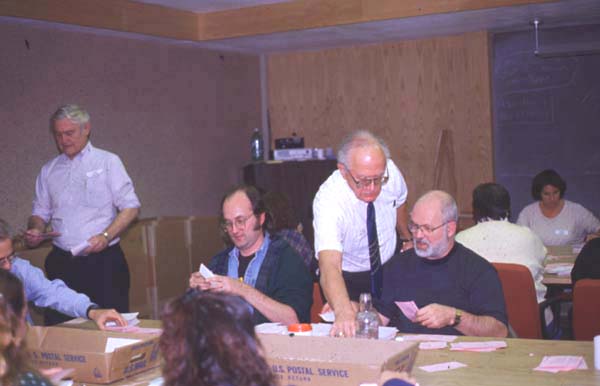 Under the supervision of the ARRL Committee of Tellers and an independent auditor, ARRL staff members sort ballots for the recent Board of Directors' election. Once sorted, ballots are counted by machine. |
When the ARRL Board of Directors meets in January, three new directors will sit among them, although two of them have been there before. The only first-time Board member--Hudson Division Director-elect Frank Fallon, N2FF, of East Williston, New York--defeated incumbent Director Richard Sandell, WK6R, in the balloting. Sandell became director following the September 5, 1996, resignation of Paul Vydareny, WB2VUK. New England Director-elect Tom Frenaye, K1KI, of West Suffield, Connecticut, outpolled incumbent Director Bill Burden, WB1BRE, to regain a seat on the Board. Frenaye is a former League staff member, director and vice president. West Gulf Division Vice Director (and former Director and vice president) Jim Haynie, WB5JBP, of Dallas, Texas, faced no opposition to replace retiring Director Tom Comstock, N5TC. Barney Boone, KJ5AE, succeeds him as the new West Gulf Division vice director. J.P. Kleinhaus, W2XX (ex-AA2DU) won the vacant Hudson Division vice director's seat.
After the nearly 37,700 ballots were counted November 15 at League headquarters, incumbent directors facing opposition successfully retained their seats in four other divisions, while incumbent vice directors prevailed in their races in two divisions (see Board of Directors Balloting sidebar for vote totals in all races). Mary Lou Brown, NM7N, returns for a second term as director in the Northwestern Division; John Kanode, N4MM, begins his fifth term as Roanoke Division director; Marshall Quiat, AG0X, was re-elected to a sixth term in the Rocky Mountain Division; and Fried Heyn, WA6WZO, who has served on the Board since 1984, returns for his sixth full term as Southwestern Division director. Vice Directors Howard Huntington, K9KM, and Don Haney, KA1T, were re-elected in the Central and New England Divisions, respectively.
Incumbents re-elected without opposition included Central Division Director Ed Metzger, W9PRN; Northwest Division Vice Director Greg Milnes, W7AGQ; Roanoke Division Vice Director Dennis Bodson, W4PWF; Rocky Mountain Division Vice Director Walt Stinson, W0CP and Southwestern Division Vice Director Art Goddard, W6XD.
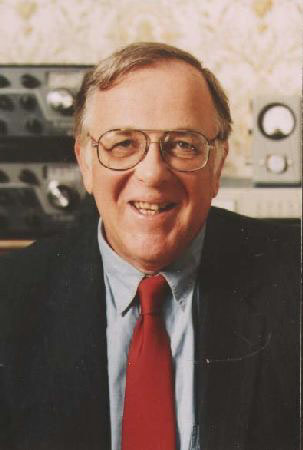 Director-elect Fallon |
Fallon, 57, a retired veteran high school English teacher (33 years), has been a ham since 1962. He primarily enjoys DXing and contesting, especially on RTTY. A not-for-profit group he founded--Radio Amateurs Defense and Information Organization, or RADIO--helps fund challenges to restrictive antenna ordinances, and he hopes to apply what he's learned in that arena as a Board member. Fallon says he'd like to see the protections of PRB-1 written into state laws in New York and New Jersey, and he believes the future of the hobby will depend on "learning how to use the political system." Fallon is active in several Amateur Radio organizations. His son, Sean, is KD6ZSK.
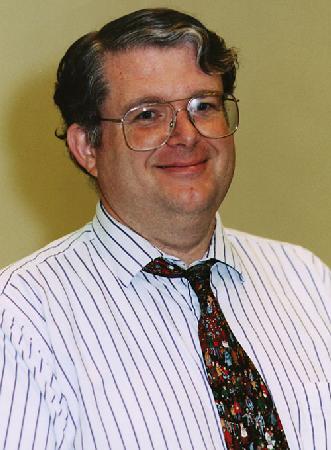 Director-elect Frenaye |
Frenaye, 46, served for 11 years (1985 until 1996) on the ARRL Board of Directors and as New England Division Director and as a vice president. He's been a ham for 33 years and is an avid contester (Frenaye is president of the Yankee Clipper Contest Club) and an ARRL Life Member. Frenaye favors efforts to increase ARRL membership while cutting expenses, making more ARRL information available electronically, and ensuring that the ARRL has a major role in efforts to privatize the administration of Amateur Radio.
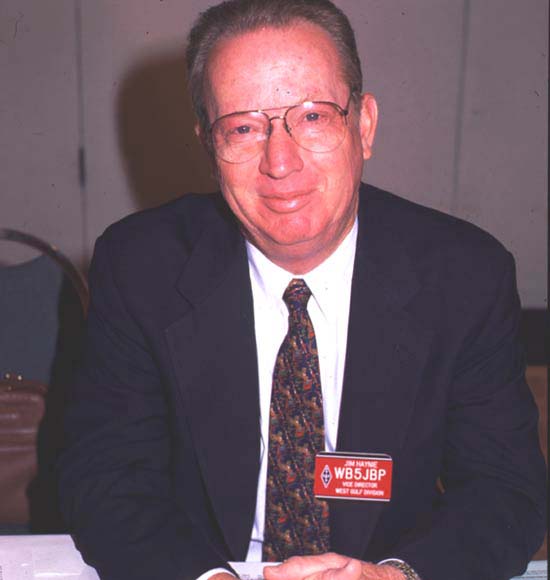 Director-elect Haynie |
Haynie, 53, served on the Board previously. He was West Gulf Division director from 1987 until 1990, and a vice president from 1990 until 1992. He has been West Gulf vice director since 1995. A ham since 1971, Haynie has served as president of both the Dallas Amateur Radio Club and the Southwest Radio Society and has been active in public service. His on-the-air interests focus primarily on satellites, although he said he keeps some 75-meter schedules too. Haynie, a metals broker, describes himself as "a realist" who is concerned about the future of Amateur Radio and believes the hobby will have to grapple with some critical issues over the next ten years. He thinks one of the keys to growth is to rediscover the "mystique" of ham radio, an element he feels has been lost in these days of instant media access.
Boone, 43, of Grand Prairie, Texas, has been a ham since 1983 and considers Haynie and Comstock his ham radio mentors. Boone is an active DXer. He's also served as director of programming for the annual Ham-Com in Dallas, including two national ARRL conventions. An auditor by profession. Boone has an interest in bringing his accounting expertise to his new role. He says he'd like the League to develop an even stronger presence in Washington, DC, and believes that a "team effort" involving all aspects of ham radio is needed to ensure a future for the hobby.
Kleinhaus, 32, of Scarsdale, New York, outvoted Peter J. Malvasi, W2PM (ex-WB2BYQ), to win the vacant Hudson Division vice director's seat. A ham since high school, Kleinhaus has been the chairman of the ARRL Contest Advisory Committee for about 18 months. He says he hopes to apply his extensive business expertise in his new League role. He also will work with the new director to support efforts to recruit new ARRL members and to protect hams from local zoning codes that restrict antennas and towers.
| Board of Directors Balloting |
The ARRL Committee of Tellers for the election of directors and vice directors for the 1997 through 1998 term met at ARRL Headquarters November 15 to count ballots. Here are the results. In each case the candidate receiving the greater number of votes was declared elected. Their two-year terms begin at noon January 1, 1997.
- Hudson division for director,
- Frank Fallon, N2FF, 2168.
- Richard Sandell, WK6R, 1680.
- Richard Sandell, WK6R, 1680.
- New England division for director,
- Tom Frenaye, K1KI, 2705.
- Bill Burden, WB1BRE, 1523.
- Bill Burden, WB1BRE, 1523.
- Northwestern division for director,
- Mary Lou Brown, NM7N, 2902.
- Mary Lewis, W7QGP, 1803.
- Mary Lewis, W7QGP, 1803.
- Roanoke division for director,
- John Kanode, N4MM, 2340.
- Reed Whitten, AB4W, 2095.
- Reed Whitten, AB4W, 2095.
- Rocky Mountain division for director,
- Marshall Quiat, AG0X, 1490.
- Gunnar Carlson, AE4W, 768.
- Gunnar Carlson, AE4W, 768.
- Southwestern division for director,
- Fried Heyn, WA6WZO, 4010.
- Glenn Webb, W6FP, 1973.
- Glenn Webb, W6FP, 1973.
- Central division for vice director,
- Howard Huntington, K9KM, 2188.
- Mike Hoshiko, W9CJW, 2095.
- Mike Hoshiko, W9CJW, 2095.
- Hudson division for vice director,
- J.P. Kleinhaus, W2XX, 1905.
- Peter Malvasi, W2PM (ex-WB2BYQ), 1864.
- Peter Malvasi, W2PM (ex-WB2BYQ), 1864.
- New England division for vice director,
- Don Haney, KA1T, 2908.
- Hal Offutt, W1NN, 1274.
| SECTION MANAGER ELECTION RESULTS |
Len Buonaiuto, KE2LE, is the new section manager in the New York City/Long Island section. He outpolled Andrew Borrok, N2TZX, 528 to 442 in recent voting. His term of office begins January 1, 1997. Buonaiuto, 48, lives in Islip Terrace, New York.
Seven other sections were uncontested, and the following were declared elected: In the Eastern Massachusetts Section, Larry Ober, W1MW (ex-KC1VS); in the Missouri Section, Roger Volk, K0GOB; in the Nebraska Section, Bill McCollum, KE0XQ; in the Northern New York Section, Charles Orem, KD2AJ; in the South Carolina Section, David Berry, KE4W (ex-KE4OOW); in the Southern New Jersey Section, Jean Priestley, KA2YKN; in the Western Pennsylvania Section, William Edgar, N3LLR.
| FCC ISSUED CALL SIGN UPDATE |
The following is a list of the FCC's most recently issued call signs as of November 12, 1996.
| District | Group A - Extra | Group B - Advanced | Group C - Tech/Gen | Group D - Novice |
|---|---|---|---|---|
| 0 | AB0DC | KI0FC | ++ | KB0YXI |
| 1 | AA1QU | KE1GI | N1YCR | KB1CAD |
| 2 | AB2CK | KG2JD | ++ | KC2ADQ |
| 3 | AA3PC | KE3YB | N3YGZ | KB3BQZ |
| 4 | AE4YV | KT4XU | ++ | KF4NBG |
| 5 | AC5KH | KM5ER | ++ | KC5WVH |
| 6 | AC6YH | KQ6KI | ++ | KF6HGA |
| 7 | AB7TF | KK7CT | ++ | KC7THI |
| 8 | AA8YM | KG8ZL | ++ | KC8FFX |
| 9 | AA9TN | KG9IJ | ++ | KB9OWJ |
| Hawaii | AH7H | AH60V | KH7BO | WH6DCV |
| Alaska | # | AL7QT | KL0BI | WL7CTY |
| Virgin Islands | WP2X | KP2CJ | NP2JM | WP2AIH |
| Puerto Rico | KP3V | KP3AN | NP3HM | WP4NMO |
# New prefixes are available for this block, but no call signs have been issued.
++ All call signs in this group have been issued in this area.
| AEA FOR SALE BUT STILL IN BUSINESS |
Advanced Electronic Applications Inc--better known as AEA--is on the market and is no longer handling customer service requests, as callers to the company's Lynnwood, Washington, headquarters discovered this week. Telephone calls to AEA now are being answered by a machine. A recorded message says: "We are in the process of selling the company and are not able to take your call. If you need further information regarding service, we would suggest that you contact the ARRL in about a month, as they will be kept aware of any purchase arrangements."
The League was unaware that it would be listed as a contact point. Those seeking customer service assistance should not call the ARRL to request it. The League has no information in this regard and cannot help AEA customers. However, the ARRL will inform the ham radio community of new developments via The ARRL Letter and QST.
Earlier this year, company chairman Mike Lamb, N7ML, took over day-to-day control of AEA, following the hasty departure of former president Rod Proctor, KI7ZI. Lamb had hopes of turning the company around and had introduced several new products on the Amateur Radio market, including the long-awaited DSP-232 multimode TNC, a 6-meter halo antenna, and a dedicated 9600-baud packet transceiver. In recent weeks, Lamb has made no secret of the fact that he has been seeking a buyer or new investors for AEA; over the past two months, the company has laid off most of its employees. While the company no longer handles customer service requests, Lamb said this week that AEA still is taking orders and even continues to manufacture some items. AEA products also continue to be available from some dealers. The company's three product lines include antennas, test (analyst) equipment, and data products/software.
| SOLAR ACTIVITY REBOUNDS |
Solar seer Tad Cook, KT7H, in Seattle, Washington reports: Solar activity is up. Average sunspot numbers were 13 points above the average for the previous week, and solar flux averaged about 3 points higher. Could this signal the upturn in activity we have been waiting for? Solar flux should drift downward to around 70 over the next few days and remain there until after the first week in December, when it should crawl up to the mid-70s again. No stormy periods are forecast over the next 30 days, but, of course, this is based on previous solar rotations, and cannot predict any new coronal holes on the Sun.
Here are some path projections for the CQ Worldwide DX contest this weekend. From the East coast of the US: To Western Europe, check 80 meters from 2030 to 0930 UTC, 40 meters from 1830 to 2300 UTC and from 0330 to 0730 UTC, and 20 meters from 1400 to 1730 UTC. To South Africa check 80 meters from 2130 to 0400 UTC, 40 meters from 2030 to 0430 UTC, 20 meters from 1300 to 1830 UTC, and 15 meters from 1430 to 1730 UTC, particularly around 1600 UTC. To South America check 80 meters from 2300 to 0900 UTC, 40 meters from 2200 to 1000 UTC, 20 meters from 1400 to 2100 UTC and 15 meters from 1600 to 1800 UTC. To the Caribbean check 80 meters from 2100 to 1200 UTC, 40 meters around the clock except from 1100 to 1230 UTC, 20 meters from 1300 to 1500 UTC and 1800 to 2100 UTC, and 15 meters from 1530 to 1800 UTC. To Australia check 80 meters from 0900 to 1200 UTC, 40 meters from 0800 to 1200 UTC, and 20 meters around 1400 to 1500 UTC. To Japan check 80 meters around 0700 to 1230 UTC, and 40 meters from 0630 to 1000 UTC and 1230 to 1400 UTC.
From the West Coast of the US: To Western Europe, check 80 meters from 0000 to 0930 UTC, 40 from 2300 to 0230 UTC and 0600 to 1200 UTC and 20 around 1600 to 1700 UTC. To South Africa check 80 from 0100 to 0330 UTC, 40 from 0000 to 0230 UTC, 20 from 1730 to 2300 UTC and 15 around 1830 to 2030 UTC. To South America check 80 from 0130 to 0930 UTC, 40 from 0030 to 1000 UTC, 20 from 2000 to 0030 UTC, 15 from 1730 to 2130 UTC, and possibly 10 from 1830 to 2200 UTC. To the Caribbean check 80 from 0000 to 1130 UTC, 40 from 2300 to 1300 UTC, 20 from 1630 to 2200 UTC, and 15 from 1730 to 2000 UTC. To Australia check 80 from 0830 to 1500 UTC, 40 from 0800 to 1530 UTC, 20 from 1630 to 1830 UTC, and 15 from 2100 to 0030 UTC. To Japan check 80 from 0630 to 1600 UTC, 40 from 0530 to 1700 UTC, 20 from 2130 to 0030 UTC, and 15 around 2300 UTC.
Sunspot numbers for November 14 through 20 were 13, 29, 26, 53, 24, 13 and 11, respectively, with a mean of 24.1. The 10.7-cm flux was 73.7, 73.6, 73.9, 72, 74.1, 74.4 and 74.5, respectively, with a mean of 73.7. The planetary A indices for the same period were 12, 11, 3, 12, 12, 8, and 6, respectively, with a mean of 9.1.
| OSCAR 13: THE END IS NEAR |
OSCAR 13--Amateur Radio's "DX satellite"--is in its last days. The satellite continues to operate, but the end is near. Its orbit is decaying rapidly, and it is about to re-enter our atmosphere. James Miller, G3RUH, reports that severe heating has begun as the satellite churns through the atmosphere with each near-Earth (perigee) pass. As OSCAR 13 swings around the planet, solar panel temperatures are rising, and, at last report, were well above 100 degrees C. The satellite is not designed to tolerate these temperatures. G3RUH advises those equipped to work with OSCAR 13 to make their last QSOs as soon as possible. Miller doesn't think the electronic systems can survive more than another week, if that long. According to present estimates, re-entry will take place in less than two weeks.--Steve Ford, WB8IMY
| FAR OFFERS SCHOLARSHIPS FOR HAMS |
The nonprofit Foundation for Amateur Radio Inc--an ARRL-affiliated federation of more than 75 radio clubs in the Washington, DC, area--plans to administer 60 scholarships for the 1997-98 academic year to help licensed radio amateurs with their post-secondary education. Five of the scholarships are fully funded with income from grants and the foundation's annual hamfest in Gaithersburg, Maryland. FAR administers the remaining 55 scholarships without cost to the donors.
Licensed hams are eligible to compete for these awards if they plan to pursue a full-time course of study beyond high school and are enrolled or have been accepted at an accredited university, college or technical school. Awards range from $500 to $2500, with preference given in some cases to those pursuing certain courses of study or to residents of specific geographical areas (Delaware, Florida, Maine, Maryland, New Jersey, Ohio, Pennsylvania, Texas, Virginia and Wisconsin). Application forms and additional information are available by letter or QSL postmarked prior to April 30, 1997, from FAR Scholarships, 6903 Rhode Island Ave, College Park, MD 20740. Contributions to FAR are tax-deductible.
| In Brief . . . |
- Cutting red tape for ARRL badges: With many ARRL appointees receiving new call signs under the FCC's vanity call sign program, you may receive their requests/order forms for new official ARRL badges reflecting call sign changes. To reduce red tape and save time, we have authorized ARRL Participating Badge Engravers to manufacture new badges for current badge-holders without requiring the submission of the usual badge order/application form (FSD-1194). A photocopy of the appointee's current badge, or the engraver's record of the original badge order, is sufficient proof to establish the eligibility of the current badge-holder. This should help in expediting orders. --Rick Palm, K1CE
- SK W2SKE elevated to Broadcasting Hall of Fame: The late Bill Leonard, W2SKE, a former President of CBS News, was inducted into the Broadcasting and Cable Hall of Fame on November 11 in New York City. Leonard, an avid DXer and contest operator in the 1960s and 1970s, died in October 1994. In ham circles, Leonard also is remembered for his 1958 contribution to Sports Illustrated, "The Battle of the Hams," which described the "sport of DXing." Leonard was first licensed in 1934 as W1JHV, while he was a student at Dartmouth College. In a 1981 interview in QST, Leonard predicted that "ham radio, in one form or another, will be around 100 years from now." --This Week in Amateur Radio
- Satellite seminar: Ready for something new? How about the exciting world of satellites? Learn how easy it is to "work the birds," especially with Phase 3D being launched this year. The Miami Tropical Hamboree, ARRL and AMSAT will sponsor a satellite workshop Friday, January 31, 2-7 PM. Space is limited. To register, contact Rosalie White, WA1STO, 860-594-0237; e-mail rwhite@arrl.org. The fee is $20 for ARRL members and $25 for nonmembers.
- Iran may issue ham tickets: Iranian hams may soon be heard on the air. The British Broadcasting Company's monitoring service reported in November that the Iranian Ministry of Post, Telephone and Telegraph soon will issue Amateur Radio licenses to Iranian citizens. The BBC quoted the Teheran-based English-language newspaper The Iran Times. According to the report, the Iranian Ministry has invited radio enthusiasts over the age of 16 to sign up for special Amateur Radio license training. --Amateur Radio Newsline
| The ARRL Letter |
The ARRL Letter is published by the American Radio Relay League, 225 Main St, Newington, CT 06111; tel 860-594-0200; fax 860-594-0259. Rodney J. Stafford, KB6ZV, President; David Sumner, K1ZZ, Executive Vice President.
Electronic edition circulation, Kathy Capodicasa, N1GZO, e-mail kcapodicasa@arrl.org.
Editorial, Rick Lindquist, N1RL, e-mail elindquist@arrl.org.
Visit the ARRLWeb page at http://www.arrl.org.
The purpose of The ARRL Letter is to provide the essential news of interest to active, organizationally minded radio amateurs faster than it can be disseminated by our official journal, QST. We strive to be fast, accurate and readable in our reporting.
Material from The ARRL Letter may be reproduced in whole or in part, in any form, including photoreproduction and electronic databanks, provided that credit is given to The ARRL Letter and The American Radio Relay League.